On this page
- 01What is measured during electrical testing
- 02Who has to have electrical testing done
- 03Inspection intervals under DGUV Regulation 3
- 04Fixed installations and portable equipment at a business
- 05How an inspection works
- 06What the test report contains
- 07When testing pays off in a private household
- 08Electrical testing in Neuss and the surrounding area
- 09Frequently asked questions
What is measured during electrical testing
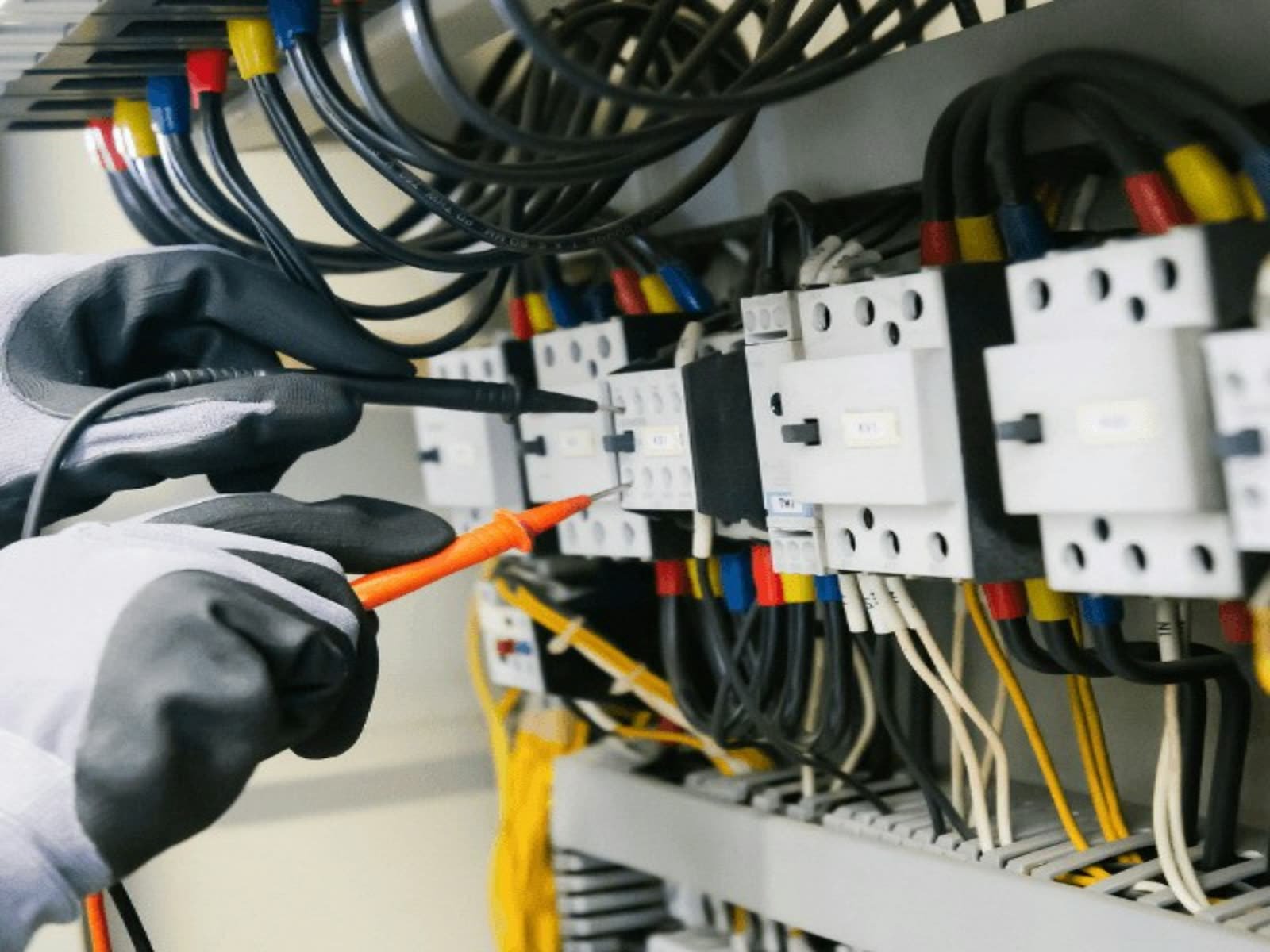
Electrical testing shows with measured values whether the installation's protective measures work in the event of a fault. Each measurement answers its own question:
| Test | What it shows |
|---|
| Visual inspection | Condition of the distribution board, cables, sockets and switches, labelling of circuits, visible damage |
| Continuity of the protective conductor | Whether the protective conductor is connected throughout so a fault current can flow away safely |
| Insulation resistance | Whether cables and appliances are sufficiently insulated from each other and from earth |
| Loop impedance | Whether enough current flows in a fault for the fuse to disconnect in time |
| Residual current device (RCD) | Whether the RCD trips quickly enough on a fault current |
| Functional test | Whether protective devices and test buttons actually work |
Many of these faults cannot be seen from the outside. A broken protective conductor goes unnoticed in everyday use as long as no appliance is faulty; only in a fault does it decide whether an appliance casing becomes live. Likewise, an RCD can be installed for years without anyone noticing that it trips too slowly or not at all. That is exactly why the installation is measured and not just looked at.
Who has to have electrical testing done
Regular testing is mandatory above all for businesses with employees. Under § 14 of the German Industrial Safety Regulation (BetrSichV), the employer must have work equipment exposed to damaging influences inspected regularly by a person qualified to do so; DGUV Regulation 3 sets this out for electrical installations and equipment.
Landlords must keep the flat in the agreed condition throughout the tenancy under § 535 BGB; there is no fixed inspection interval for them. For owner-occupied houses and flats, testing is voluntary. When it still makes sense and what the term E-Check means is explained in our article E-Check in Germany.
Inspection intervals under DGUV Regulation 3
DGUV Regulation 3 gives guideline values in its implementation notes, which the employer adapts to the business. An overview of the inspection intervals summarises them as follows:
| What is inspected | Guideline | Who inspects |
|---|
| Electrical installations and fixed equipment | 4 years | Qualified electrician |
| Installations in special locations (DIN VDE 0100 group 700) | 1 year | Qualified electrician |
| Portable equipment and leads | 6 months, 3 months on construction sites; can be extended if the defect rate is below 2 %, at most 1 year (construction, workshop) or 2 years (office) | Qualified electrician or electrotechnically instructed person with suitable test equipment |
| RCDs in non-stationary installations | monthly for effectiveness | Qualified electrician or instructed person |
| RCDs in stationary installations | every 6 months via the test button | User |
How often a business actually inspects is set by the employer. An office with lightly used equipment can work with longer intervals than a workshop where cables are moved, bent and driven over every day.
Fixed installations and portable equipment at a business
At a business two things are inspected: the fixed installation with distribution board, cables and sockets, and the portable equipment, meaning everything with a plug, from the coffee machine to the drill, plus extension leads and power strips. Different intervals and measuring methods apply to each.
With many appliances, a list with location and test date pays off. No appliance is overlooked, new ones are added straight away, and the next inspection can be planned instead of being caught up under time pressure. This applies to offices and practices as much as to workshops, warehouses and shops.
How an inspection works
It starts with a short enquiry: which building or business is it, roughly how many circuits are there and, for businesses, how many portable appliances? We then agree the inspection date with you.
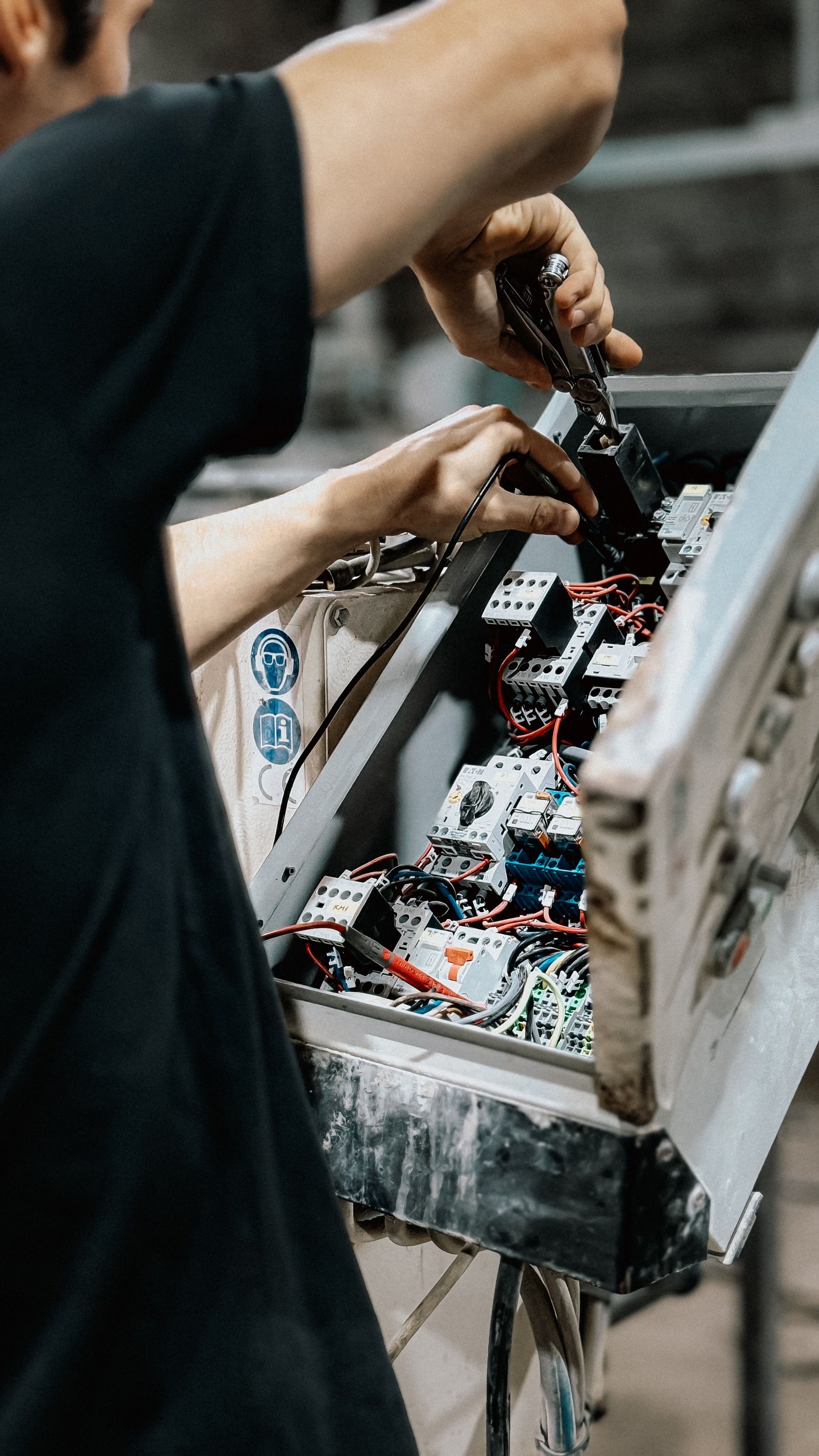
On site the installation is inspected, measured and tested, and at businesses the appliances too. All measured values, the result and any defects found are then recorded in the test report. Dangerous defects are fixed immediately or the affected circuit stays off; the rest are repaired and then re-tested.
What the test report contains
The test report is the proof that the inspection was done and what it found. Under § 14 BetrSichV, businesses must record the results and keep them at least until the next inspection. A report contains:
- Type and scope of the inspection
- The measured values per circuit or appliance
- The result and any defects found
- Name and signature of the inspector
When testing pays off in a private household
Even without an obligation, there are situations in which electrical testing brings clarity at home. After buying a house you usually do not know the age and condition of the installation; a test report shows whether the protective conductor and the residual current devices work and which circuits exist. After water damage or a short circuit, measurements show whether cables and boxes have been damaged.
Testing also makes sense before large new loads are added, such as a wallbox, a heat pump or an instantaneous water heater. It then shows in advance whether the existing installation can carry the extra load or whether something has to be adapted first. If you rent out a flat, the report also documents the condition of the installation when tenants change.
Electrical testing in Neuss and the surrounding area
As an electrician in Neuss we test offices, practices, workshops and shops as well as rented flats and detached houses, from the city centre and Hammfeld to Norf, Holzheim and Rosellen. Outside Neuss we carry out electrical testing in Kaarst, Meerbusch, Dormagen, Grevenbroich and Korschenbroich as well as in Düsseldorf, Duisburg and Cologne.
For a quote, the type of building or business and the approximate scope are enough.
You can find every place we work in on our service area page.
Frequently asked questions
How often must a business have its electrical installation tested?
The DGUV Regulation 3 guideline is 4 years for electrical installations and fixed equipment and 6 months for portable equipment. The employer sets the actual interval for the business.
Do I have to have my installation tested as a private person?
No, testing is voluntary for owner-occupied houses and flats. It makes sense after damage, when the condition is unknown and before adding large new loads such as a wallbox.
Who may carry out electrical testing?
A qualified electrician or a person qualified to carry out inspections. Portable equipment may also be tested by electrotechnically instructed persons using suitable test equipment.
How long must the test report be kept?
Businesses must keep the inspection results at least until the next inspection under § 14 BetrSichV.
What happens if defects are found?
The defects are listed in the test report. Dangerous defects are fixed immediately or the circuit stays off; the rest are repaired and then re-tested.
Is electrical testing the same as an E-Check?
The measurements are the same. The E-CHECK is a service offered by the electrical trades under its own name; what is behind it is explained in our E-Check article.
What does electrical testing cost?
It depends on the size of the installation and the number of appliances. After your enquiry you receive a quote.