On this page
- 01What an electrical installation includes
- 02New build, renovation or extension
- 03Protection to the current standard
- 04Older buildings: when a new installation makes sense
- 05How an electrical installation is carried out
- 06What is often forgotten in planning
- 07Electrical installation in Neuss and the surrounding area
- 08Frequently asked questions
What an electrical installation includes
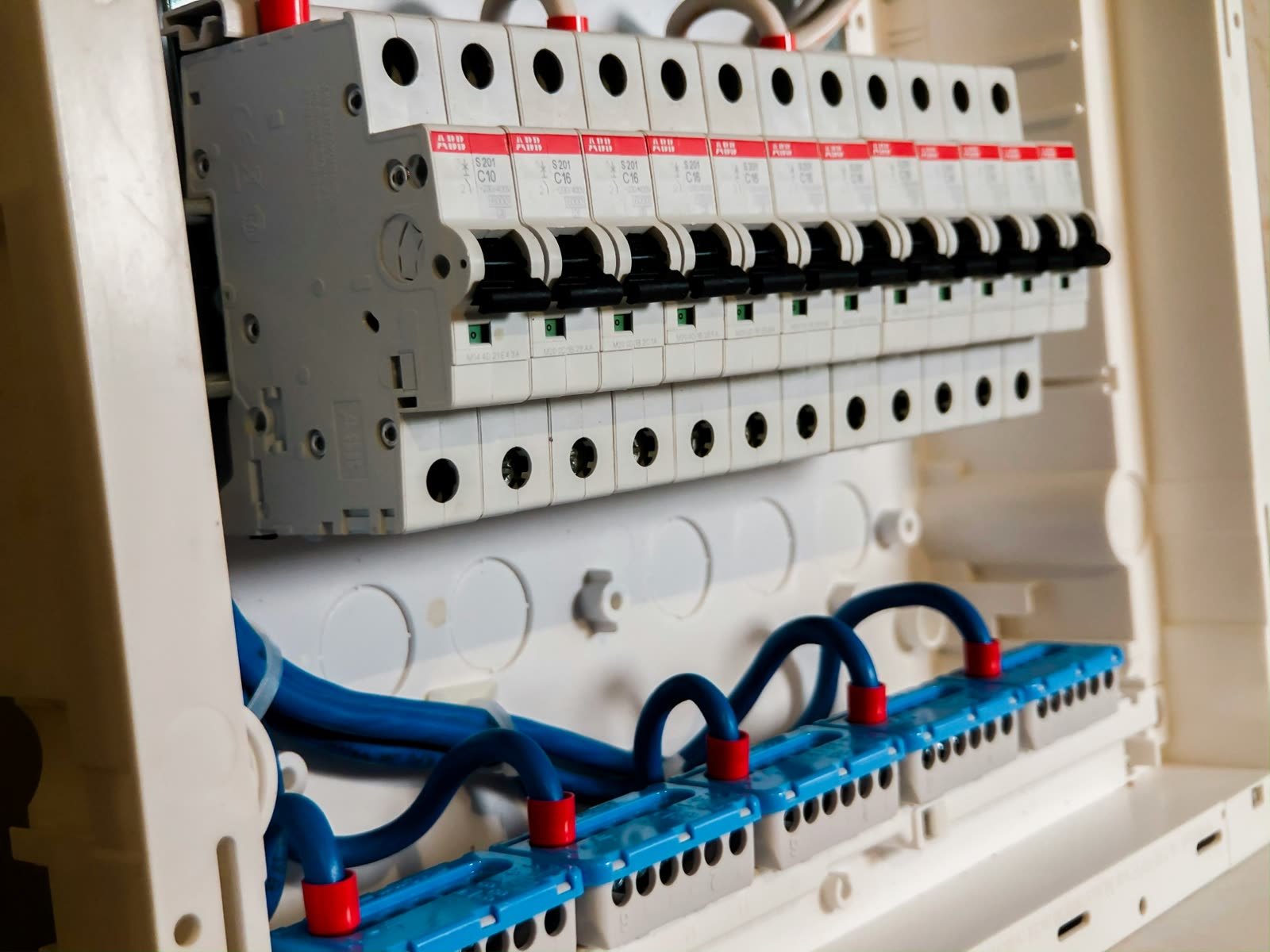
An electrical installation distributes power from the house connection to every single socket. Cables run from the meter cabinet to one or more sub-distribution boards, and from there the circuits go into the rooms: to sockets, switches, lights and permanently connected appliances such as the cooker, instantaneous water heater or heating equipment. How many circuits there are and how they are divided decides whether the installation works reliably day to day and whether a fault affects one room or half the house.
The protective devices matter just as much. Circuit breakers protect the cables against overload and short circuits, residual current devices (RCDs) protect people against electric shock, and surge protection keeps appliances safe from voltage spikes, for example during a thunderstorm. Only a clean layout combined with the right protection makes an installation safe.
New build, renovation or extension
What an electrical installation involves depends on the project. The table shows the typical cases:
| Project | Typical scope | What matters |
|---|
| New build | Complete installation from the meter cabinet to the socket | Early planning based on the floor plan, conduits for future technology |
| Renovating an older building | New cables, new sub-distribution board, up-to-date protection | Condition of the existing cables, working in stages in an occupied house |
| Extension | Additional circuits, sockets, outdoor areas, new loads | Whether the distribution board and protection can take the extra load |
| Commercial | Distribution boards, three-phase connections and lighting for offices, shops or workshops | Coordinating the work with day-to-day operations |
For an extension we first look at the existing sub-distribution board: whether there is room for new protective devices, whether the supply cable can carry the extra load and whether the existing circuits already run through residual current devices. If the board is not sufficient, it is extended or replaced. For a wallbox, heat pump or instantaneous water heater in particular, this check decides whether the new load can be operated safely.
Protection to the current standard
For new installations the standard requires more protection than before. Since edition DIN VDE 0100-410:2018-10, socket circuits up to 32 A (previously 20 A) and all lighting circuits in dwellings must be protected by residual current devices, as Hager summarises in its notes on the standard.
Surge protection is also mandatory for new residential buildings: under DIN VDE 0100-443 and -534 this applies to buildings whose planning started on or after 1 October 2016, mandatory for the power supply lines entering the house and recommended for telephone, internet and cable TV connections (DEHN, Wissen kompakt). It does not protect against a direct lightning strike; that is what an external lightning protection system is for.
Older buildings: when a new installation makes sense
An existing electrical installation does not automatically have to be replaced just because the standards have changed; what counts in principle is the standard at the time it was installed. Anyone who renovates or extends, however, carries out the new parts to current rules, and by then at the latest it becomes clear whether the old installation still fits.
Typical signs of an outdated installation are two-core cables without a separate protective conductor, old screw-in fuses, missing residual current devices and too few circuits, so that many appliances in the kitchen or living room share one line. Power strips in every corner are another sign that the installation no longer keeps up with today's needs.
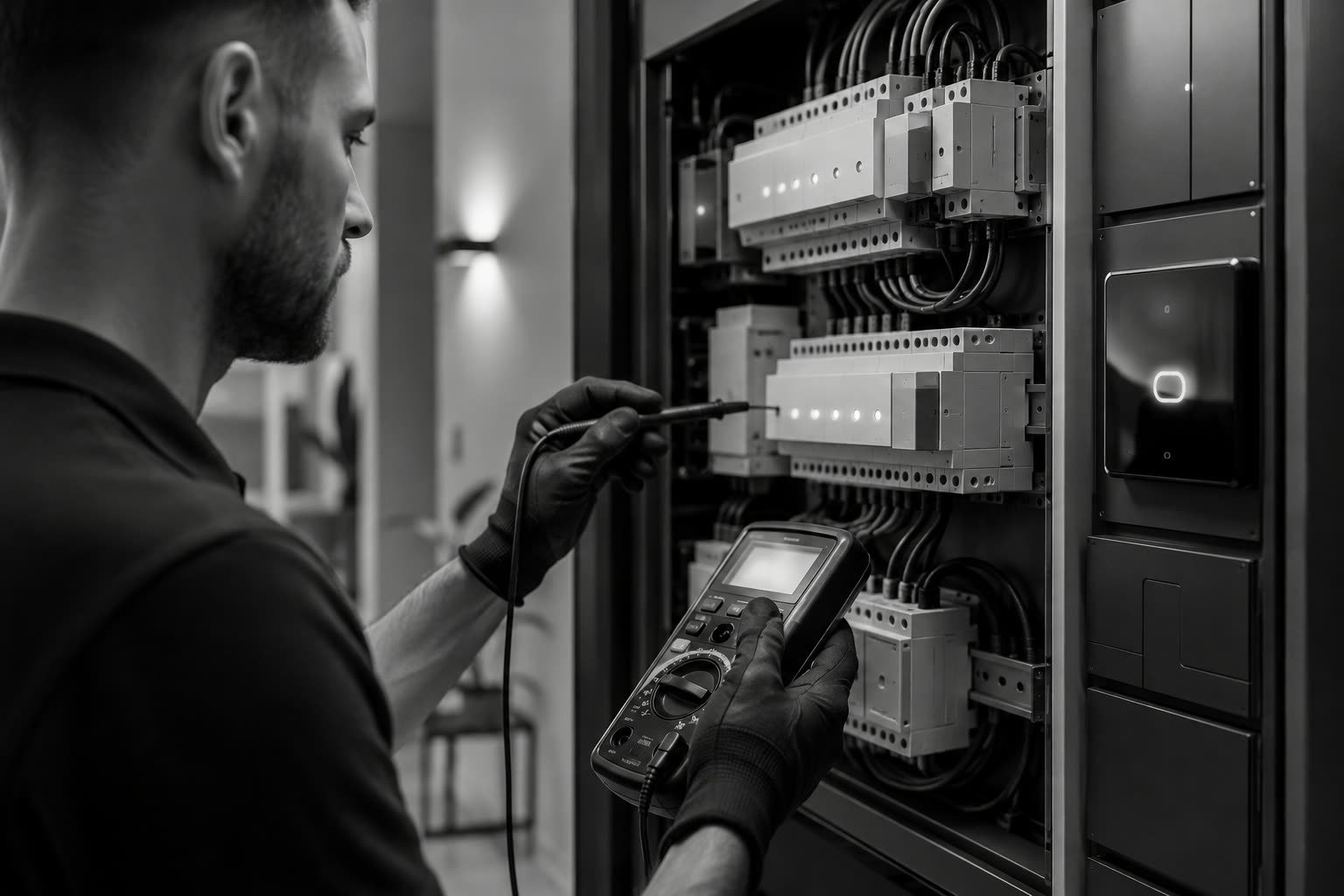
Whether a partial renovation is enough or a new installation makes more sense can be judged much better after electrical testing with measured values than by looking.
How an electrical installation is carried out
It starts with a site visit: we look at the building, the meter cabinet and the existing cables and discuss how the rooms are used. This leads to a plan with circuits, sockets and light points per room and the layout of the distribution board, after which you receive a quote.
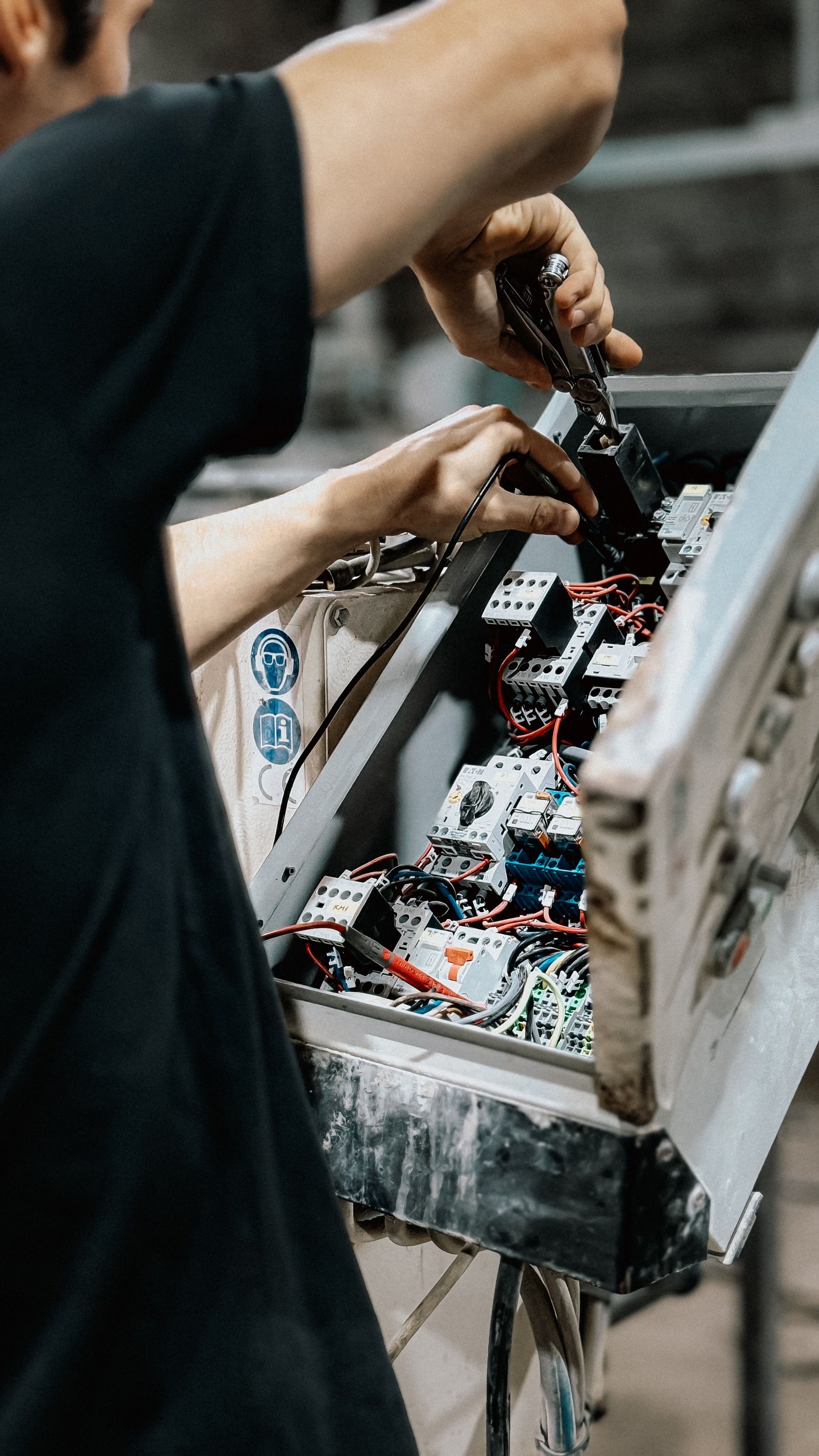
In a new build the work happens in two stages. Before plastering, boxes are set and cables and conduits are laid; after plastering come sockets, switches and the connection of the distribution board. In occupied buildings we work in sections so that as much of the house as possible keeps its power. Finally the installation is put into operation, measured and documented in a test report.
Under § 13 of the German Low Voltage Connection Ordinance, electrical installations may only be built, extended or modified by the grid operator or a company registered in an installer directory. This protects you, because only then is it ensured that the work is carried out and documented properly.
What is often forgotten in planning
An electrical installation lasts for decades. Whatever is missing in the plan is later added at greater cost or solved with extension leads. These points are worth thinking about early:
- Sockets where appliances actually stand: by the bed, at the desk, above the kitchen worktop
- Outdoor sockets and lighting for the terrace, garden and entrance
- Conduits for network, fibre and future technology
- Preparation for a wallbox, a solar PV system or a heat pump
- Free spaces in the sub-distribution board for later extensions
Electrical installation in Neuss and the surrounding area
As an electrician in Neuss we work on new builds in Allerheiligen or Rosellen as well as older buildings in the city centre, Furth or Grimlinghausen, in detached houses, apartment buildings and commercial units. Outside Neuss we carry out electrical installations in Kaarst, Meerbusch, Dormagen, Grevenbroich and Korschenbroich as well as in Düsseldorf, Duisburg and Cologne.
For a first assessment, the type of project, the year the building was built and, if available, a photo of the meter cabinet are enough.
You can find every place we work in on our service area page.
Frequently asked questions
Does an old electrical installation have to be replaced?
Not automatically. What counts in principle is the standard at the time of installation; anyone who renovates or extends carries out the new parts to current standards. If there are defects or danger, the installation should be repaired.
Does every circuit need an RCD?
For new installations in dwellings, DIN VDE 0100-410:2018-10 requires socket circuits up to 32 A and all lighting circuits to be protected by residual current devices.
Is surge protection mandatory?
For new residential buildings whose planning started on or after 1 October 2016, yes, for the power supply lines entering the house. For telephone, internet and cable connections it is recommended.
May I carry out electrical work myself?
No. Under § 13 NAV, building, extending and modifying the electrical installation may only be done by the grid operator or a registered installation company.
How many sockets does a room need?
That depends on how the room is used. We plan sockets and circuits room by room according to where appliances stand, so no power strips are needed later.
What does an electrical installation cost?
It depends on the size of the building, the scope and the condition of the existing installation. After the site visit you receive a quote.