Smart Home
Smart home in Neuss – control lighting, blinds and heating together
Smart home in Neuss: planning and installation for lighting, blinds, heating and energy, wired or wireless, in new builds and existing buildings.
Learn more

ServiceBuilding technology
Network cabling by Kara Elektrotechnik, your electrician in Neuss, connects rooms, floors and buildings to a central network cabinet using fixed copper and fibre optic lines. We plan and install structured cabling for homes, offices and businesses, set up network cabinets, measure every link and hand over documentation.
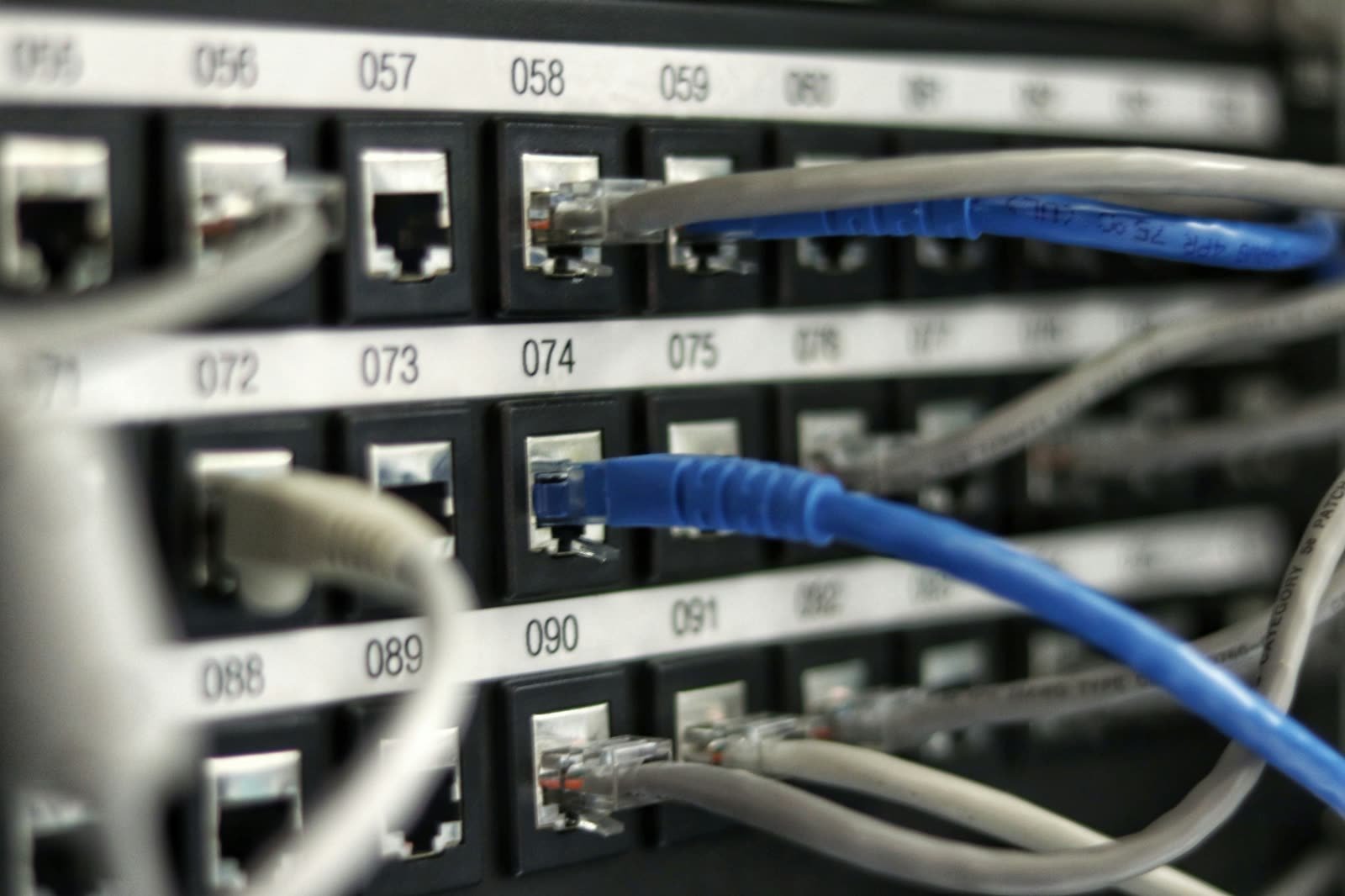
With structured network cabling, all cables run in a star from a central distributor to the data outlets in the rooms. In the distributor, usually a network cabinet, the cables terminate on a patch panel; from there they are connected to the router, switch or telephone system with short leads. This means every outlet can later be used for a different purpose without pulling new cables.
Besides the patch panel, the network cabinet also holds the switch, router, the fibre connection termination and, where needed, a telephone system. We plan it with free rack units, adequate ventilation and its own power supply so that later devices fit without conversion.
Fixed cables have two advantages over wireless: they deliver their bandwidth regardless of walls and neighbouring networks, and they reliably supply Wi-Fi access points, cameras or door intercoms. In houses with several floors in particular, one cabled access point per floor is often a better solution than a single router in the basement.
Copper and fibre complement each other in network cabling rather than excluding each other. The table shows where each technology is usually used:
| Criterion | Copper (twisted pair) | Fibre optic |
|---|---|---|
| Typical use | Data outlets in rooms, connecting devices | Links between floors, buildings and distributors, house connection |
| Power over the cable | Possible, for example for access points and cameras | Not possible |
| Sensitivity to interference | Depends on cable quality and installation | Immune to electromagnetic interference |
| End devices | Directly on almost all devices | Needs a matching counterpart or media converter |
In homes, copper cabling is usually enough for the rooms. If a fibre connection comes into the house, we connect the termination point to the network cabinet so that the signal is distributed from there to every room.
There is a dedicated standard for residential buildings: DIN EN 50173-4 (VDE 0800-173-4), currently in the 2024-06 edition. According to the description by DIN Media, it applies to single-family and multi-family houses and, together with DIN EN 50173-1, specifies among other things the structure and minimum configuration of the cabling, the interfaces at the IT and broadcast outlets, performance requirements for links and components, and test methods.
In practice this means a central distributor, for example in the utility room, and data outlets from there to every room where devices stand or might stand later. If the electrical installation is being renewed anyway, we lay network cables and conduits at the same time.
For certain buildings, the German Telecommunications Act requires suitable infrastructure. Under § 145 TKG, newly built buildings that are to have telecommunications connections must be fitted with passive in-building network infrastructure for very high capacity networks and an access point to these components. The same applies to buildings undergoing major renovation.
Under the same provision, single-family houses, listed buildings and holiday homes, among others, are exempt. For apartment buildings and commercial buildings, network infrastructure therefore belongs in the plan from the start; we coordinate cable routes, conduits and space for the network cabinet with the other trades.
A secure network needs up-to-date Wi-Fi encryption as well as good cabling. The BSI advises no longer using the outdated WEP encryption, using at least WPA2 with a sufficiently long and complex password and, where the router and devices support it, using WPA3.
For connected building technology, the BSI also recommends a network separate from the rest of the home network. We take this into account when cameras, door intercoms or a smart home are integrated: the cabling is planned so that such devices can be run separately from the office or family network.
First we clarify which rooms and devices are to be connected, where the network cabinet should stand and what internet connection is available. We then plan cable routes, outlets and distributors and prepare a quote. After installation every link is measured so that faults such as swapped wires or poor terminations are found before handover. The handover includes:
In businesses we work in sections and agree switchovers with you so that workplaces can keep running with as little interruption as possible. In offices and practices we plan several connections per workstation, outlets for printers, ceiling access points and spare capacity for future workstations, so that new staff do not mean new cables.
As an electrician in Neuss we cable homes, practices and offices in the city centre, Hammfeld, Furth, Hoisten and Gnadental. We also plan and install network cabling and network cabinets in Kaarst, Meerbusch, Dormagen, Grevenbroich and Korschenbroich as well as in Düsseldorf, Duisburg and Cologne.
For a first assessment, a floor plan or room list, the number of connections you want and the type of internet connection are enough.
You can find every place we work in on our service area page.
Yes, in most cases. Fixed cables provide stable bandwidth and supply access points that make Wi-Fi available on every floor.
Yes. Depending on the building we use existing conduits, cable ducts or shafts; where there are none, cables are laid under plaster or in ducts.
As central, dry and accessible as possible, for example in a utility or plant room, close to the internet connection and with its own socket.
Under § 145 TKG, newly built buildings with telecommunications connections must have passive network infrastructure for very high capacity networks. Single-family houses are exempt.
The connection provider. Its public network ends at the network termination point on your premises; we plan and install the distribution behind it, from the termination point to the individual rooms.
Yes. In new builds and renovations we plan the electrical installation and network cabling together so that cable routes, outlets and distributors match.
It depends on the number of connections, the cable routes and the network cabinet. After planning you receive a quote.
Kara Elektrotechnik
Send us a floor plan or room list and the number of connections you want. We will get back to you to plan it.
Smart home in Neuss: planning and installation for lighting, blinds, heating and energy, wired or wireless, in new builds and existing buildings.
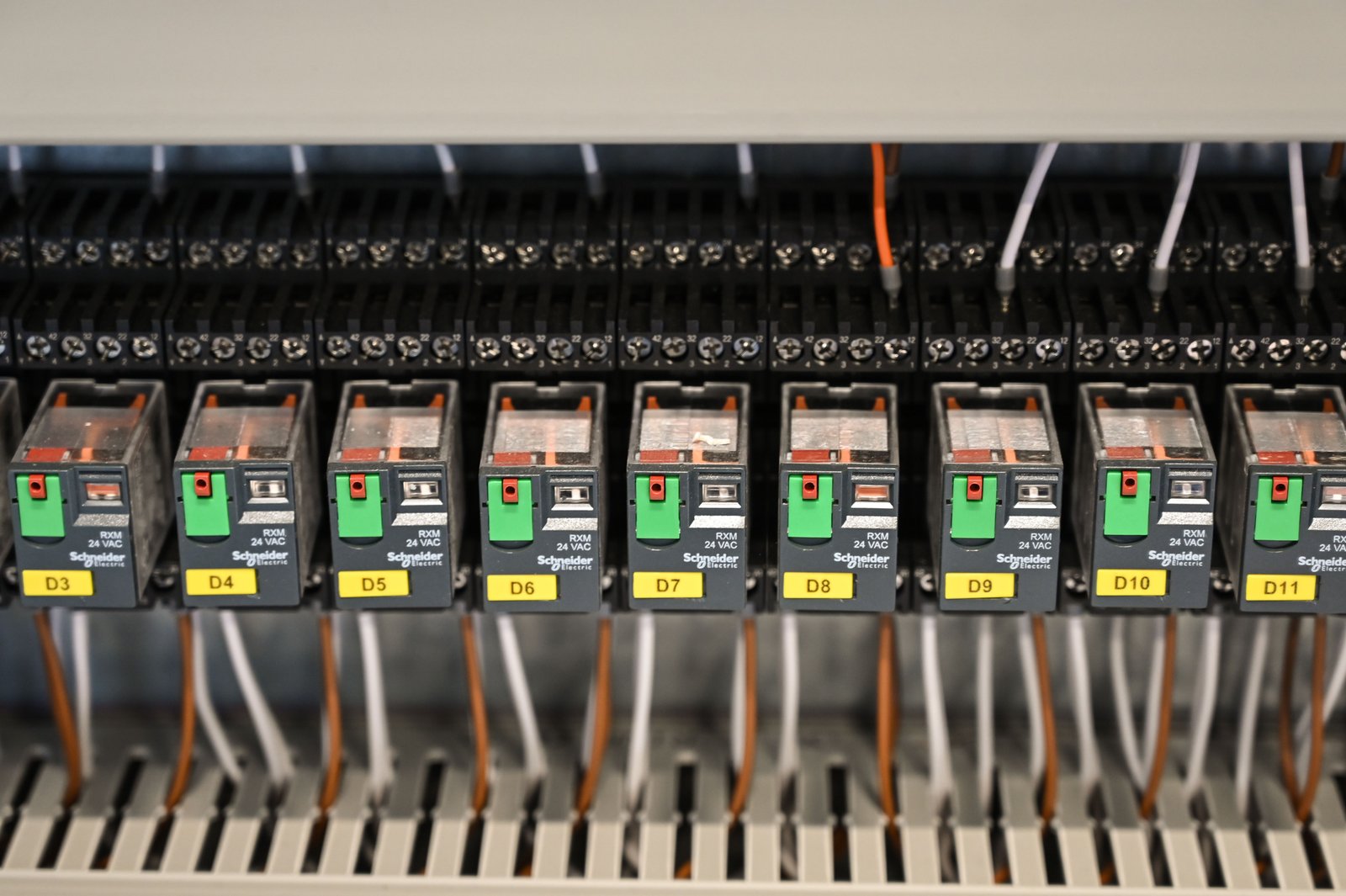
Control cabinet construction in Neuss: planning, building, testing and commissioning of control and distribution cabinets to DIN EN 61439, plus upgrades.
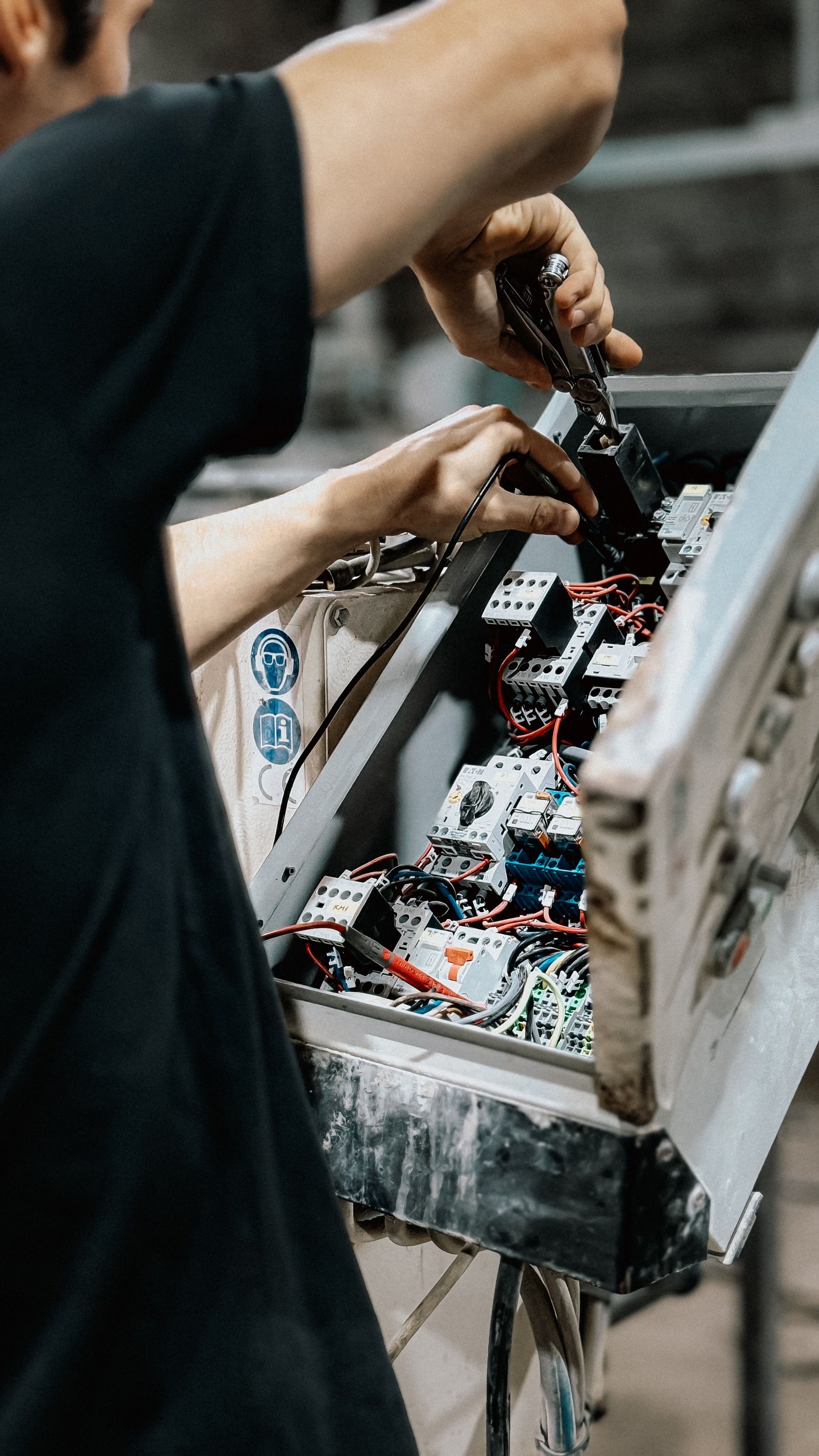
Emergency electrician in Neuss, available around the clock: power failure, short circuit or burning smell. What you can do right away and how we help.