Smart Home
Smart home in Neuss – control lighting, blinds and heating together
Smart home in Neuss: planning and installation for lighting, blinds, heating and energy, wired or wireless, in new builds and existing buildings.
Learn more
ServiceBuilding technology
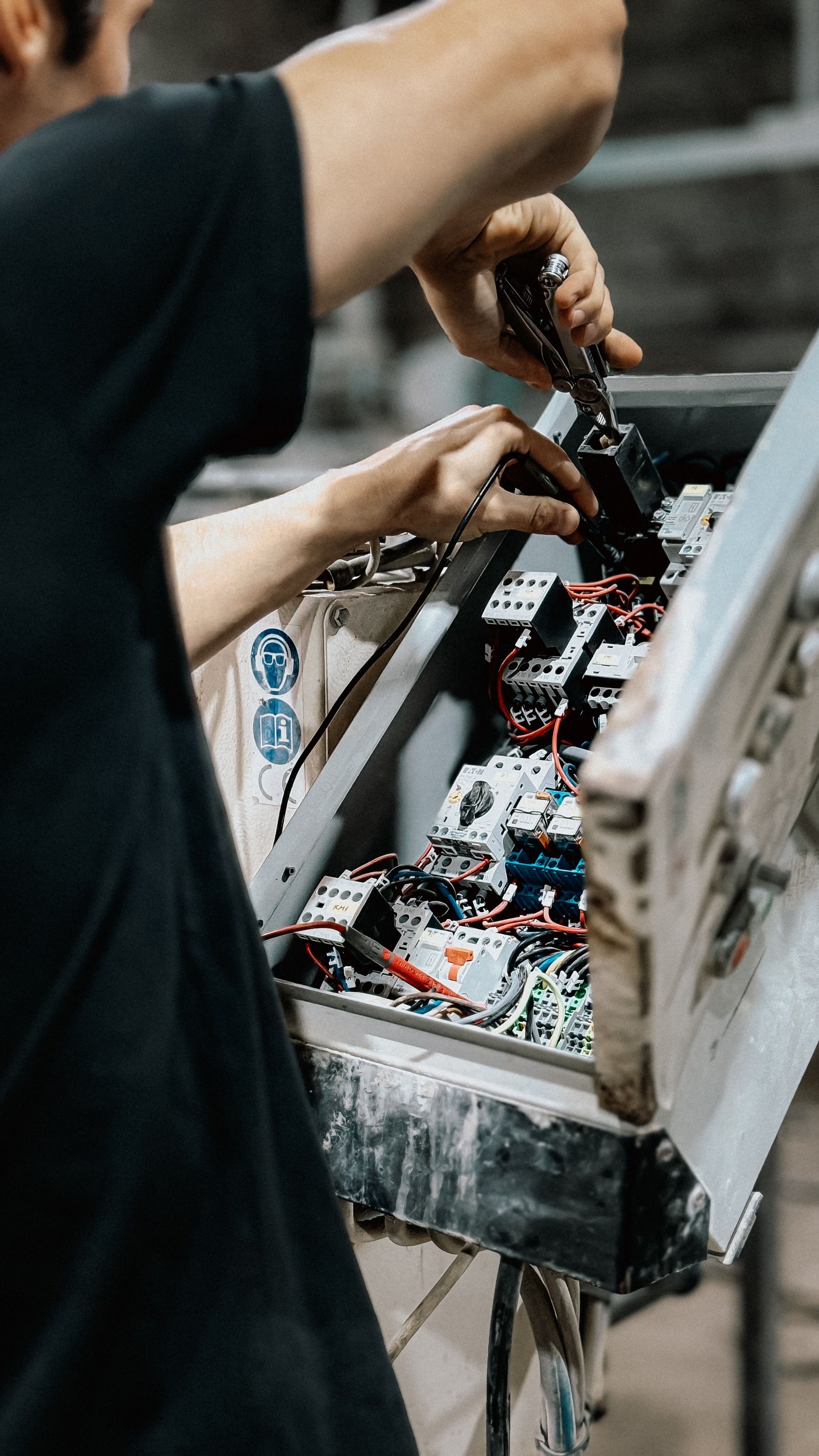
Control cabinet construction by Kara Elektrotechnik, your electrician in Neuss, covers planning, building, wiring, testing and commissioning of control and distribution cabinets for businesses, building services and machines. We build to the requirements of the DIN EN 61439 series, document every cabinet and also upgrade or extend existing installations.
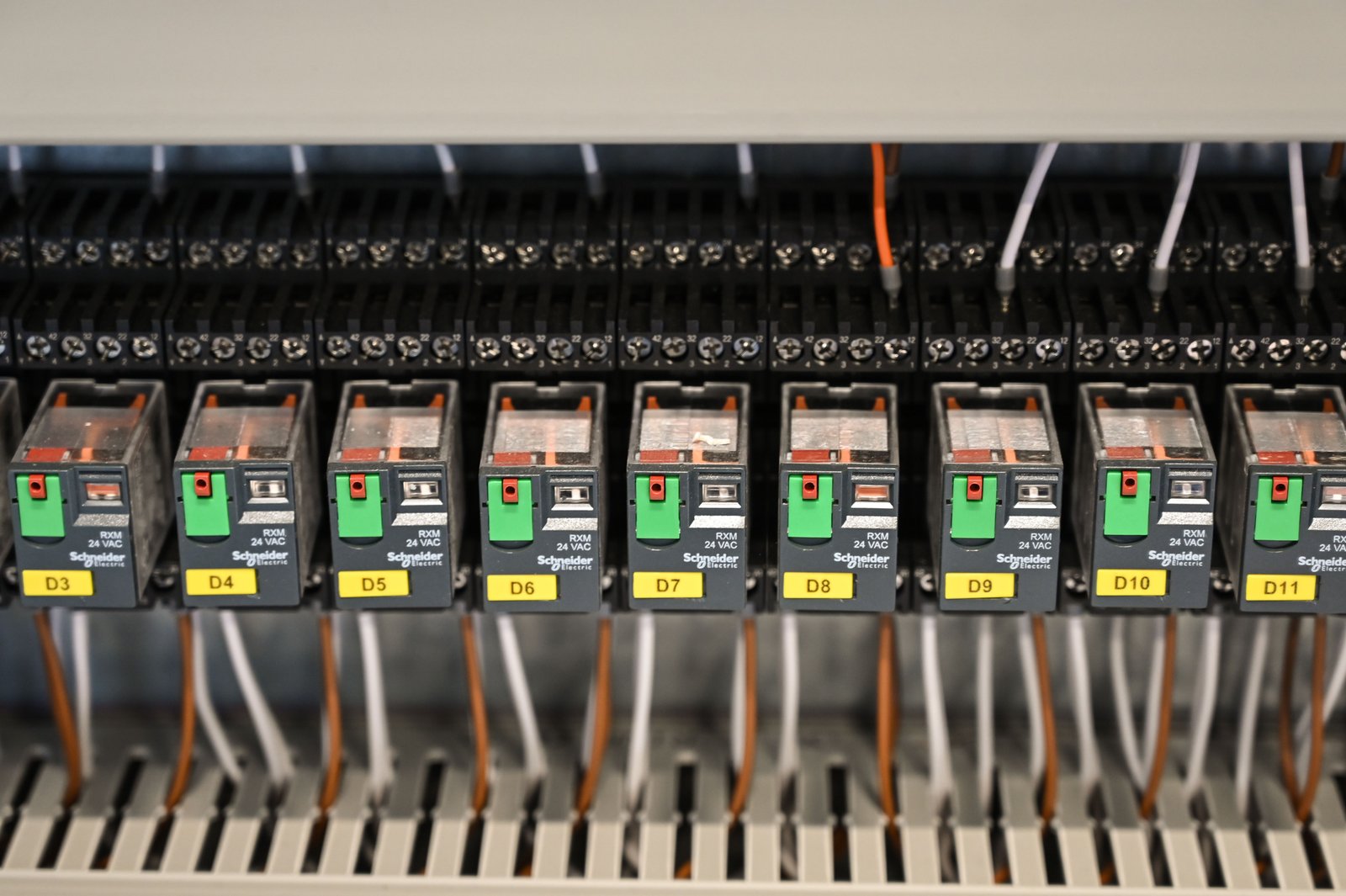
A control cabinet brings together the protective, switching and control devices of an installation in one place. In commercial buildings this might be power distribution for a hall or office building, in building services the controls for ventilation, heating, lighting or building automation, and in mechanical engineering the electrical equipment of a machine or plant.
Control cabinet construction includes the circuit diagram, the choice of components, the mechanical build, wiring, labelling and testing before delivery. The cabinet is then set up, connected and put into operation. Especially with controls for building automation, a clear, well-documented cabinet decides how quickly faults can be found and extensions carried out later.
The DIN EN 61439 series (VDE 0660-600) covers low-voltage switchgear and controlgear assemblies and divides responsibility between several parties. The ZVEI fact sheet describes the roles as follows:
| Role | Responsible for |
|---|---|
| Original manufacturer (system manufacturer) | Design verification by testing, calculation or design rules |
| Assembly manufacturer (panel builder) | Rating to the specified values, conformity with the standard towards the customer, compliance with the design verification, marking and documentation, routine verification |
| Planner or operator | Stating the standard in the specification and the interface data |
Design verification shows that a cabinet system is basically suitable for the planned ratings. Routine verification is carried out and documented on every single cabinet built. Together they are the basis for the cabinet going into operation in line with the standard.
The series consists of general rules in Part 1 and product standards for specific types: Part 2 for power switchgear and controlgear assemblies, Part 3 for distribution boards operated by ordinary persons, Part 4 for assemblies for construction sites, Part 5 for cable distribution cabinets and Part 6 for busbar trunking systems. Which part applies depends on what the cabinet is used for.
A control cabinet can only be planned as well as the information about the grid, the environment and the loads allows. The ZVEI names four areas in which the planner or operator defines the interface data:
If any information is missing, we work it out with you during planning, for example by visiting the installation site or coordinating with the machine manufacturer.
Whether a control cabinet for a machine needs its own declaration of conformity and CE marking depends on who designs it and whether it contains safety functions. The DGUV information sheet FB HM-090 distinguishes three cases: if the machine manufacturer builds the cabinet itself or has it built to its own specifications as an "extended workbench", responsibility stays with the manufacturer and the cabinet does not receive its own declaration of conformity.
If an external panel builder designs the cabinet under its own responsibility, it takes on the manufacturer's responsibility. Without safety functions it issues a declaration of conformity under the Low Voltage and EMC Directives and affixes the CE marking; if the cabinet contains safety functions, it is classed as a safety component under the Machinery Directive. We agree in writing which role we take on in your project before work begins.
Older control cabinets are usually upgraded when spare parts are no longer available, the installation is extended or the documentation no longer matches the actual state. Often the existing cabinet can stay in use if individual assemblies are replaced, spare capacity is created and circuit diagrams are brought up to date. Many older cabinets were built to the predecessor series DIN EN 60439, which classified assemblies as type-tested (TSK) or partially type-tested (PTSK). For an extension we clarify how the existing parts and the new parts built to DIN EN 61439 can be documented properly.
After every change the cabinet is tested and the documentation updated. For the recurring testing of electrical installations and equipment in operation, the German Industrial Safety Regulation requires tests by a qualified person; we describe intervals and procedure on our electrical testing page.
It starts with the cabinet's task, the interface data and the installation site. From these come the circuit diagram, parts list and layout, which we agree with you before building. After assembly and wiring follow routine verification and documentation. On site the cabinet is set up, connected and put into operation together with you or the machine manufacturer.
The documentation includes circuit diagrams, terminal and cable lists, test reports and, where required, the declaration of conformity. For extensions in running operations we plan switchovers so that they fit in with your processes.
As an electrician in Neuss we build and upgrade control cabinets for businesses in Hammfeld, Holzheim, Grefrath, Derikum and Rosellerheide as well as for buildings with extensive building services. Outside Neuss we work for customers in Kaarst, Meerbusch, Dormagen, Grevenbroich and Korschenbroich as well as in Düsseldorf, Duisburg and Cologne.
For a first conversation, the cabinet's task, a list of loads or an existing circuit diagram and the planned installation site are enough.
You can find every place we work in on our service area page.
Design verification proves that a cabinet system is suitable for the ratings and is provided by the original manufacturer. Routine verification is carried out and documented on every cabinet built.
No. If a panel builder makes the cabinet to the machine manufacturer's specifications as an extended workbench, the cabinet does not receive its own declaration of conformity under DGUV FB HM-090; responsibility stays with the machine manufacturer.
Yes, if space, ratings and condition allow. We check the cabinet first, create spare capacity and update the circuit diagrams.
Circuit diagrams, terminal and cable lists, test reports and, where required, the declaration of conformity.
The operator. Under § 14 of the German Industrial Safety Regulation, the employer must have work equipment exposed to damaging influences inspected regularly by a person qualified to do so; DGUV Regulation 3 sets this out for electrical installations and equipment.
Yes. Control cabinets are usually planned individually for an installation anyway, from a single control cabinet to power distribution.
It depends on the size, the components and the scope of documentation. Once the requirements are clear, you receive a quote.
Kara Elektrotechnik
Send us the task, a list of loads or an existing circuit diagram. We will get back to you to discuss the details.
Smart home in Neuss: planning and installation for lighting, blinds, heating and energy, wired or wireless, in new builds and existing buildings.
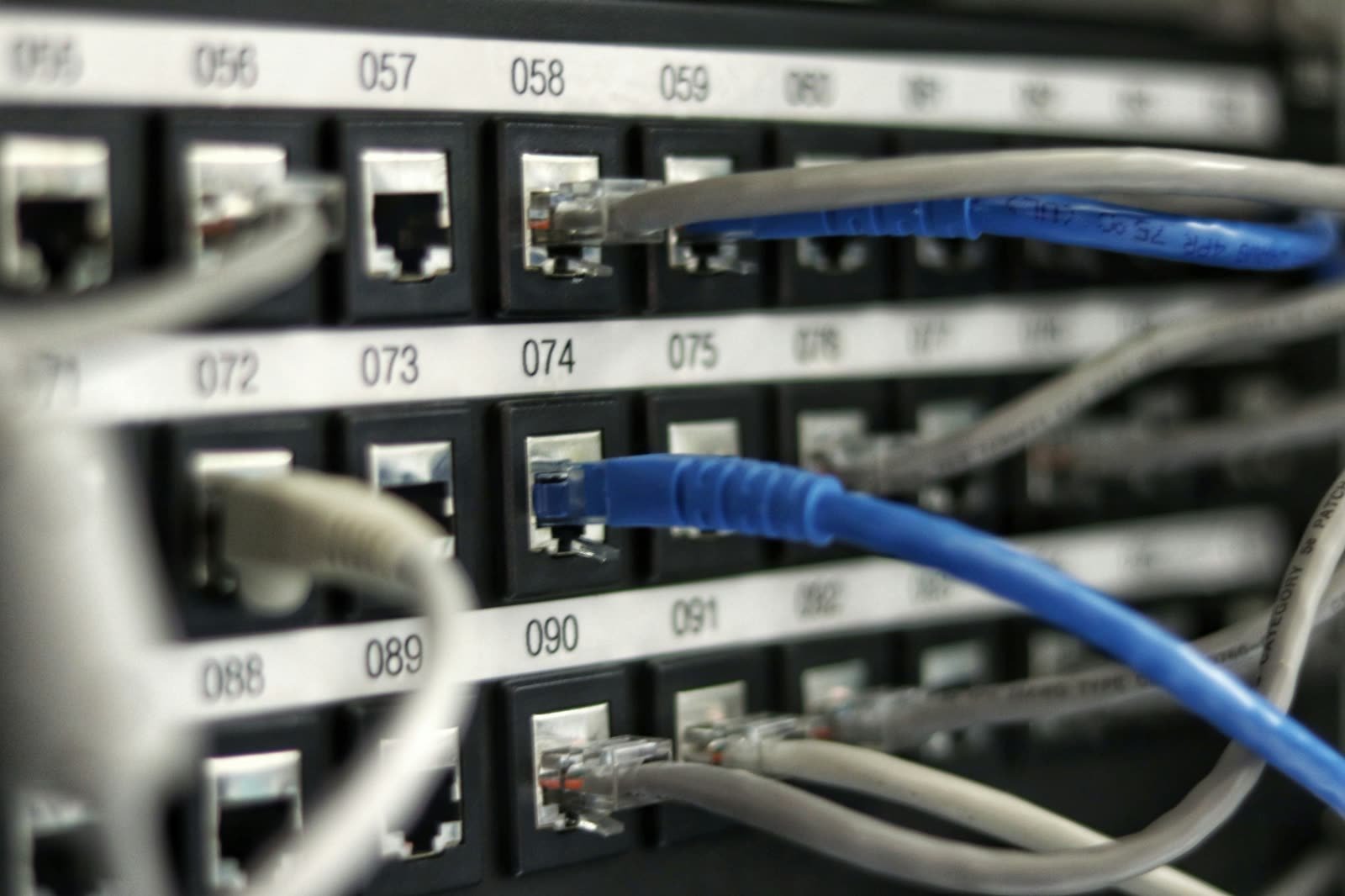
Network cabling in Neuss: structured copper and fibre cabling, network cabinets, data outlets, measurement and documentation for homes and businesses.
Emergency electrician in Neuss, available around the clock: power failure, short circuit or burning smell. What you can do right away and how we help.