E-Mobility
Wallbox 11 kW or 22 kW: which one is right for you?
Read more
CategoryTesting & Measurements
There is no legal obligation called "E-Check" in Germany. Businesses with employees must, however, have their electrical installations and equipment inspected regularly under DGUV Regulation 3, with a guideline of every four years for fixed installations. Landlords must keep the flat in proper condition. For private households an inspection is voluntary.
The E-CHECK is a service of the German electrical trades in which a contractor inspects the electrical installation and, on request, the connected appliances, and documents the result. The brand is run by ArGe Medien within the German Electrical and Information Technology Trades Association (ZVEH), which describes the E-CHECK among other things as proof for insurers.
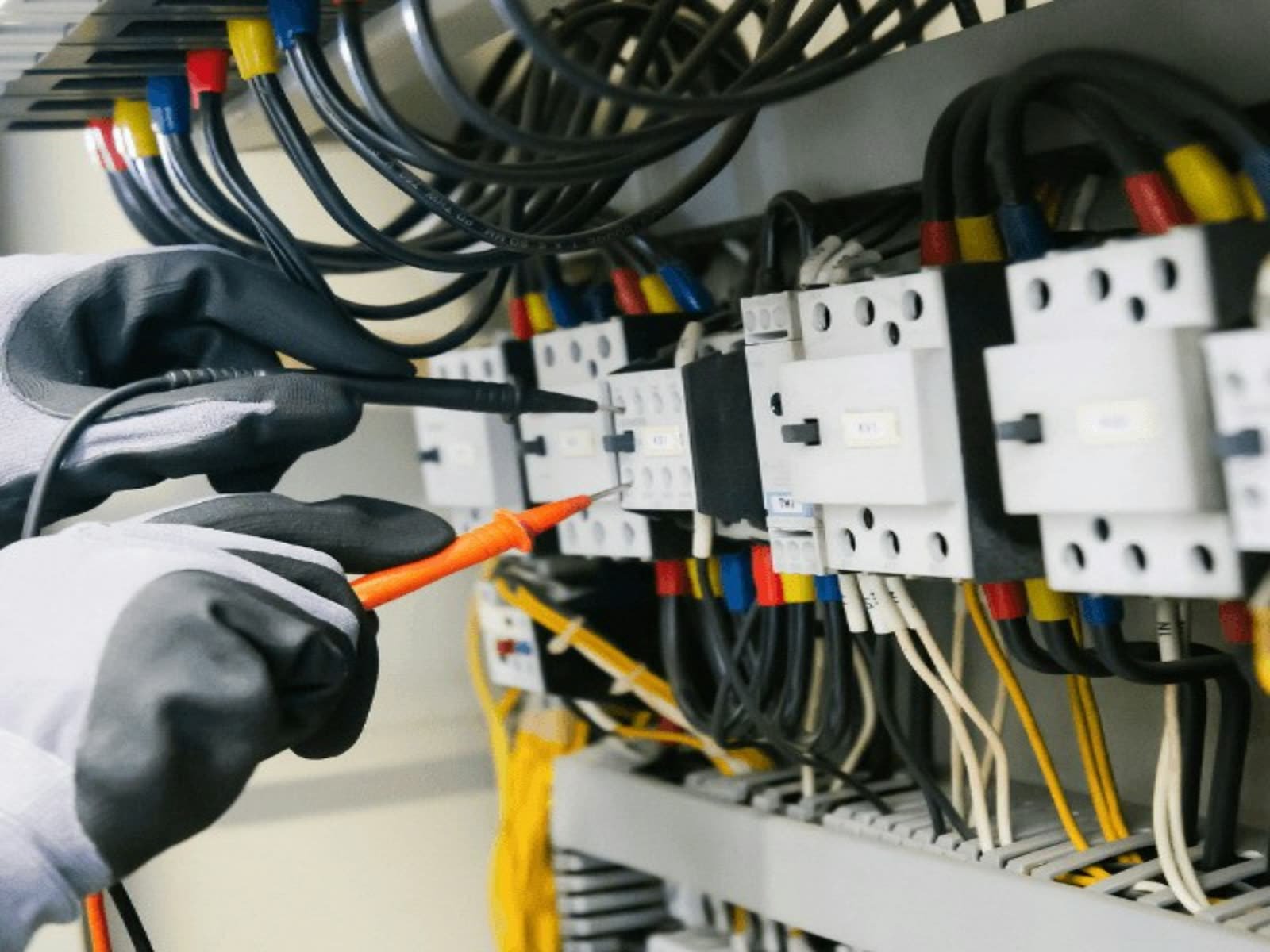
Technically it is the same work as any inspection according to the rules of electrical engineering (DIN VDE): the installation is inspected, measured and tested. Whether the inspection is called "E-CHECK" or documented as an inspection under DIN VDE or DGUV Regulation 3 does not change the measurements themselves.
For businesses with employees, regular inspection is mandatory: DGUV Regulation 3 requires electrical installations and equipment to be inspected by a qualified electrician at set intervals. Its implementation notes give guideline values that the employer adapts to the business. An overview of DGUV Regulation 3 inspection intervals summarises the tables as follows:
| What is inspected | Guideline | Note |
|---|---|---|
| Electrical installations and fixed equipment | every 4 years | inspected by a qualified electrician |
| Installations in special locations (DIN VDE 0100 group 700) | every year | shorter because of higher risk |
| Portable equipment, extension and connection leads | 6 months, 3 months on construction sites | can be extended if the defect rate is below 2 % |
| Maximum for portable equipment | construction, production, workshops: 1 year; offices: 2 years | even with a very low defect rate |
How often a business actually inspects is set by the employer. An office with lightly used equipment can work with longer intervals than a workshop where cables are moved and bent every day.
Rented flats have no fixed inspection interval comparable to DGUV Regulation 3. Under § 535 BGB, however, the landlord must keep the flat in the agreed condition throughout the tenancy, and that includes a safe electrical installation.
An inspection with a report shows the condition of the installation at a given date. Many landlords therefore have it inspected when tenants change or after work on the installation.
If you live in your own house or flat, you do not have to have the installation inspected regularly. In some situations it is still worthwhile:
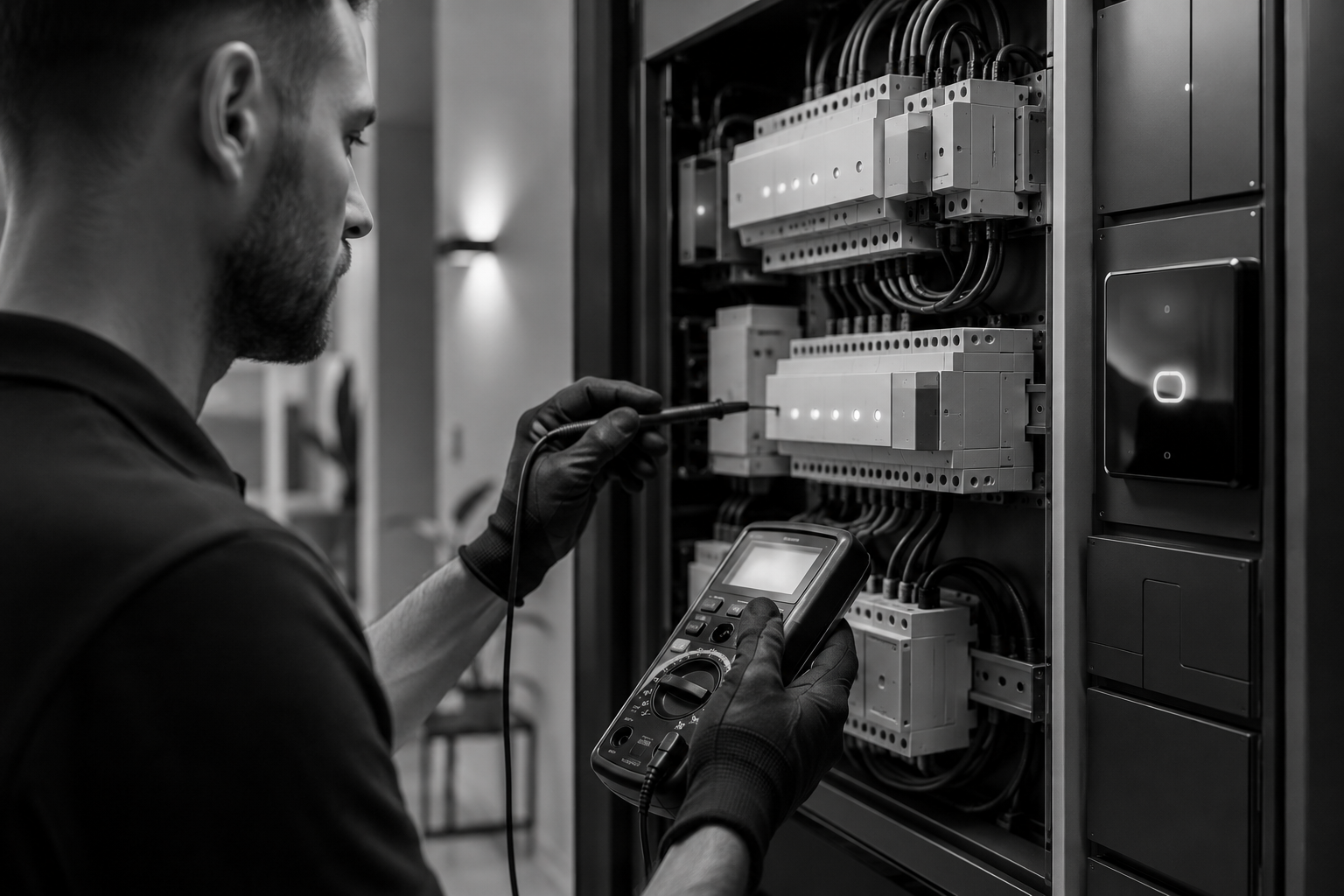
An inspection of the electrical installation has three parts: visual inspection, measurement and testing.
Defects are recorded in the report. Dangerous defects are fixed immediately or the affected circuit stays switched off; the rest are repaired promptly and then re-tested.
How we test installations and equipment and what the report contains is described on our page electrical testing in Neuss.
No. There is no obligation to inspect owner-occupied houses and flats regularly. It makes sense after damage, when the condition is unknown and before connecting large new loads.
The guideline values are 4 years for fixed installations and 6 months for portable equipment, 3 months on construction sites. The employer sets the actual interval for the business.
Yes, as soon as there are employees. For portable equipment in offices an interval of up to 2 years is possible if the defect rate is low.
There is no fixed interval. Under § 535 BGB, however, landlords must keep the flat in the agreed condition; an inspection report documents the state of the installation.
A qualified electrician with suitable measuring and test equipment. Portable equipment may also be tested by electrotechnically instructed persons using suitable test devices.
The defects are recorded in the inspection report. Dangerous defects are removed immediately or the circuit stays off; the rest are fixed promptly and re-tested.
Written by
Nedim Kara runs Kara Elektrotechnik in Neuss and has worked in electrical engineering for more than ten years: electrical installation, testing and measurement, wallboxes, solar PV and smart home, for private and commercial customers in Neuss and the surrounding area.
Kara Elektrotechnik
We are happy to advise you – in Neuss and the surrounding area.