
Testing & Measurements
E-Check in Germany: when is it mandatory and what is tested?
Read more
CategoryE-Mobility
An 11 kW wallbox is the right choice for most homes: it charges a typical battery overnight and only has to be registered with the grid operator, not approved. 22 kW only pays off if the car can charge at 22 kW AC, parking times are short and the grid operator approves.
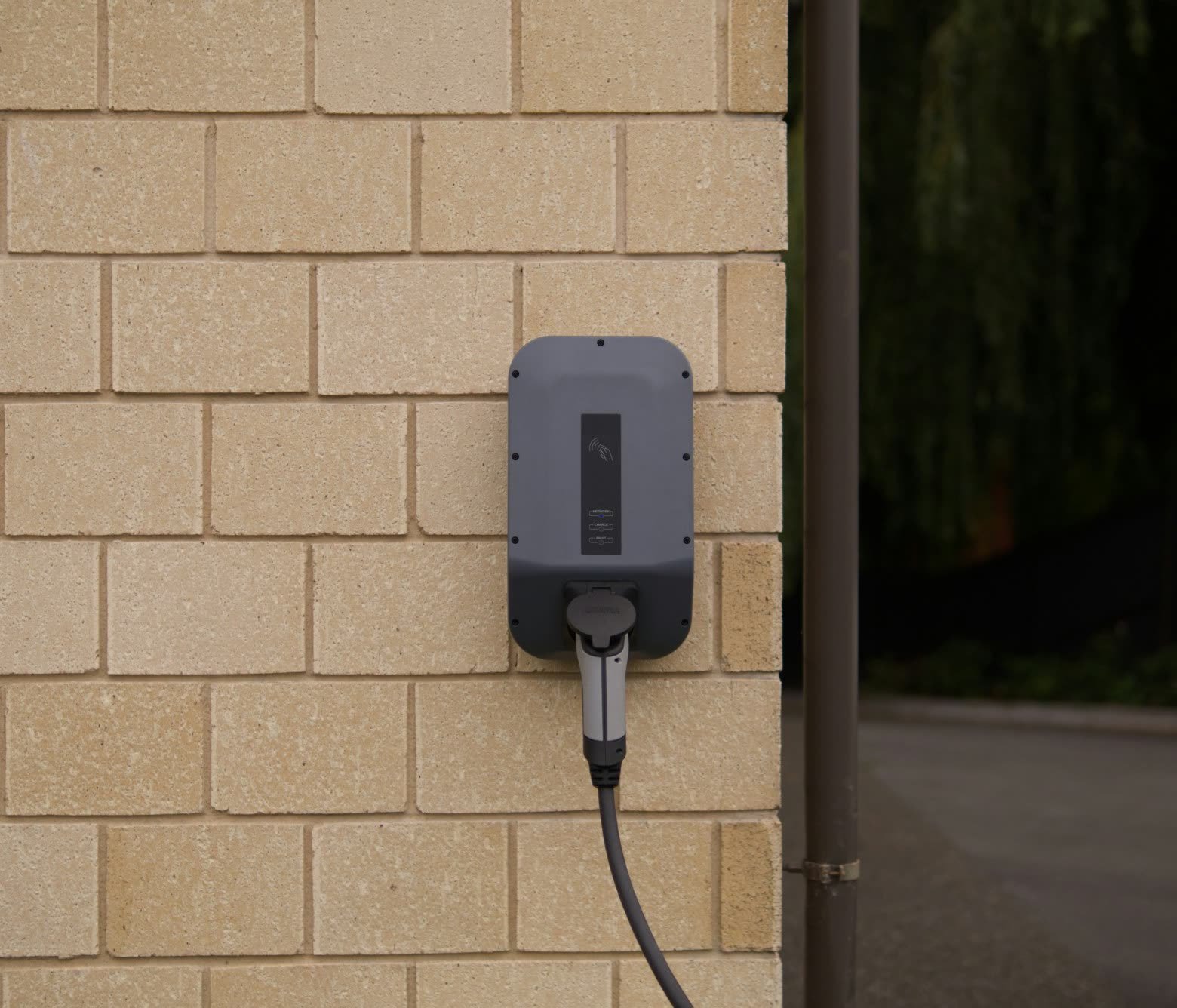
An 11 kW wallbox charges at three-phase 16 A, a 22 kW wallbox at three-phase 32 A, so twice as fast if the car accepts the power. The calculation is simple: energy divided by charging power gives the charging time.
| 11 kW | 22 kW | |
|---|---|---|
| Connection | three-phase, 16 A | three-phase, 32 A |
| Adding 40 kWh (without losses) | about 3.6 hours | about 1.8 hours |
| Range per hour at 18 kWh/100 km | about 60 km | about 120 km |
| Grid operator | notification before operation | notification and approval |
| Cable and protection | sized for 16 A | sized for 32 A |
If you come home in the evening and leave in the morning, you often have ten hours or more. In that time even large batteries are full again at 11 kW.
When charging with alternating current, the charger built into the car (on-board charger) determines how much power actually flows. Many models are limited to 11 kW. ADAC points out that not all vehicles support the higher charging power, in which case a 22 kW wallbox brings no benefit.
Check "AC charging power" in your car's specifications. If it says 11 kW or less, an 11 kW wallbox is the right choice, also for your next car as long as it charges at 11 kW too.
Under § 19 of the German Low Voltage Connection Ordinance (NAV), all charging equipment for electric vehicles must be reported to the grid operator before it is put into operation. If the total rated power exceeds 12 kVA per electrical installation, the grid operator's prior approval is also required. The operator must then respond within two months of receiving the notification.
What counts is the total, not the individual wallbox. Two 11 kW wallboxes on one house connection add up to about 22 kVA and therefore need approval, just like a single 22 kW wallbox. Double garages and families with two electric cars should plan for this from the start.
Wallboxes with a connected load above 4.2 kW that went into operation since 1 January 2024 count as controllable consumers. According to the Federal Network Agency (Bundesnetzagentur), the grid operator may reduce their consumption to as little as 4.2 kW when needed; this minimum must always be available.
In return grid fees are reduced. There are three options:
Every wallbox needs its own circuit with overcurrent protection and its own residual current device. Under DIN VDE 0100-722 this is at least a type A RCD combined with disconnection for DC fault currents above 6 mA, or a type B RCD. Many wallboxes already have the 6 mA detection built in.
If you install 11 kW now and may switch to 22 kW later, the cable and protection can be sized for 32 A from the start. That saves a new cable run later, but the grid operator still has to approve 22 kW.
A 22 kW wallbox makes sense mainly where vehicles must be ready again quickly. ADAC names workplaces with electric vans or company cars as a typical example.
Whether an 11 kW or 22 kW solution suits your house depends on the house connection and the meter cabinet. What a wallbox installation in Neuss includes is summarised on our service page.
No. A single 11 kW wallbox only has to be reported to the grid operator before it is put into operation. Approval is required once the total of all charging equipment in the installation exceeds 12 kVA.
Only if the car's on-board charger supports 22 kW AC. Many models charge at no more than 11 kW; then the 22 kW wallbox saves no time.
No. Together they exceed 12 kVA per installation, so § 19 NAV requires the grid operator's approval.
It must respond within two months of receiving the notification. If it refuses, it must state the reason and possible remedies.
No. Under § 14a EnWG it may only reduce the consumption of a controllable wallbox to as little as 4.2 kW; that power is always available.
With many models yes, if the cable and protection are sized for 32 A and the grid operator approves. This should be decided during planning.
Written by
Nedim Kara runs Kara Elektrotechnik in Neuss and has worked in electrical engineering for more than ten years: electrical installation, testing and measurement, wallboxes, solar PV and smart home, for private and commercial customers in Neuss and the surrounding area.
Kara Elektrotechnik
We are happy to advise you – in Neuss and the surrounding area.